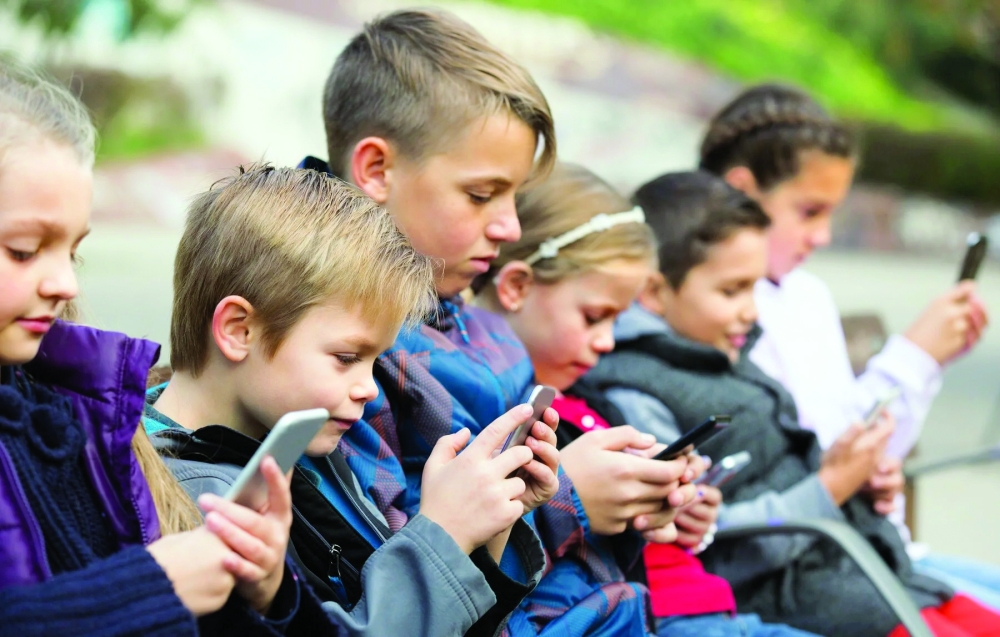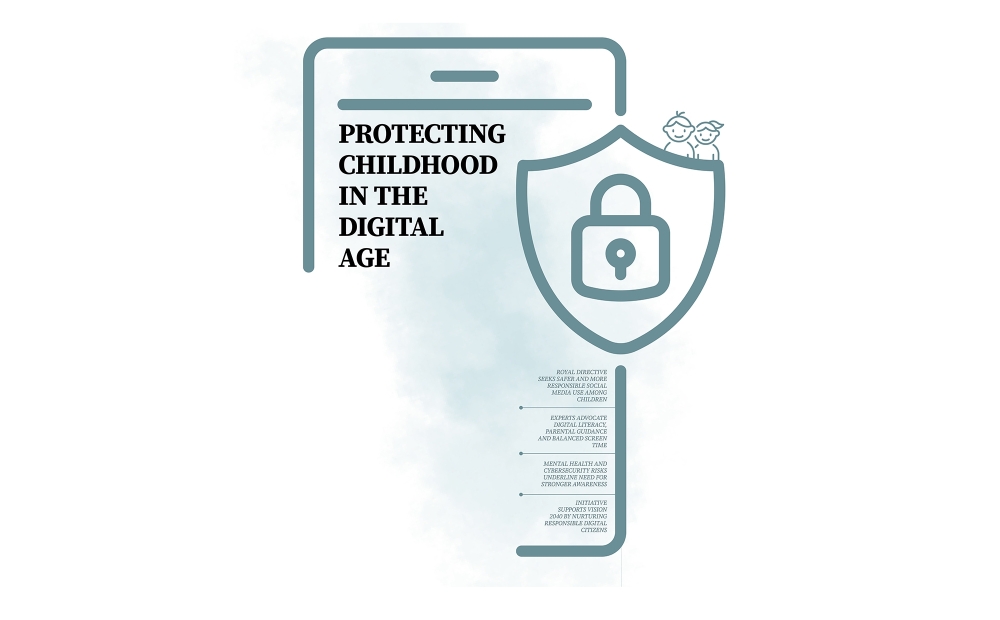





Social media has become deeply embedded in children’s daily lives, serving as a platform for learning, communication and entertainment. While it offers significant opportunities for development and engagement, experts warn that unregulated use also raises concerns related to mental health, digital safety and academic performance.
In response to these evolving challenges, a Royal directive to establish guidelines for children’s use of social media reflects the Sultanate’s proactive approach to safeguarding young users while ensuring they benefit from rapid digital transformation. The initiative aligns with Oman Vision 2040, which emphasises building a digitally aware and future-ready generation.
The debate, experts say, is no longer about whether children should use social media, but how they should use it safely and responsibly. Technology professionals and educators note that while digital platforms open doors to learning and skill development, they also expose children to risks such as cyberbullying, misinformation, excessive screen time and privacy breaches.
Engineer Anisa Juma Al Maskari, a network specialist and certified technical trainer, said the directive reflects a forward-looking vision aimed at protecting children in digital spaces. She stressed that the next phase requires clear policies and structured frameworks that maximise benefits while reducing potential harm.
“What is important now is not only regulation, but also empowerment,” she noted, adding that children must be equipped with the knowledge and skills needed to navigate digital environments safely and confidently.
Experts highlight that Oman’s approach stands out for balancing protection with empowerment. Alongside safety measures, there is a growing emphasis on digital literacy, critical thinking and innovation, ensuring that children are prepared to participate meaningfully in a technology-driven future.
Government institutions continue to strengthen awareness programmes targeting parents, teachers and students, focusing on cyber safety, privacy protection and responsible online behaviour. These efforts are designed to build a culture of awareness that extends beyond schools into households and communities.
Mental health specialists caution that excessive use of social media can contribute to increased anxiety, stress and social isolation among children. They also point to the risk of reduced concentration, declining academic performance and disrupted sleep patterns linked to prolonged screen exposure.
Digital security experts, meanwhile, warn against sharing personal data online or interacting with unknown accounts. They emphasise that parental supervision and awareness remain the first line of defence against online exploitation, fraud and harmful content.
Professionals across sectors agree that outright restriction is not a practical solution. Instead, they advocate for structured and balanced use of digital platforms. This includes setting clear time limits for device usage, monitoring content exposure, encouraging offline activities and promoting family interaction.
Such regulation, they say, helps children develop healthier habits while also strengthening real-world communication skills and family bonds. Participation in sports, cultural and social activities is encouraged as an essential counterbalance to screen time.
With rapid advances in artificial intelligence and emerging technologies, the concept of the 'digital citizen' is gaining prominence. Experts say the goal is no longer just to create technology users, but to nurture individuals who can contribute to innovation, knowledge production and problem-solving in a digital economy.
Ultimately, the Royal directive is seen as a long-term national investment in building a digitally literate generation. By combining protection with empowerment, Oman aims to prepare young people to meet future challenges while contributing to a knowledge-based society and innovation-driven economy.
Oman Observer is now on the WhatsApp channel. Click here